

Picana Negra (Cordia alliodora), also called Bolivian Bocote, Laurel Negro or Salmwood, is a South American hardwood from the same genus as Bocote. The species grows widely from Mexico to Argentina.It has dark brown tones with black streaks and a fine texture, and some boards show grain every bit as striking as Bocote's. The color can vary from golden brown to darker chocolate depending on where the tree grew, and it darkens a little with age.It's prized by craftsmen for its workability and smooth finish, and it's a medium-weight wood that's comfortable to handle. It cuts cleanly, sands well and takes an oil or clear finish beautifully, which brings out the contrast in its streaks. It's also fairly stable and moderately durable.Picana Negra offers great grain at a fair price. It's well suited to boxes, cabinetry, fine furniture, handles, guitar backs and sides, and other musical instruments. See also its relatives Louro Preto and Ziricote.
boxmaking, cabinetry, fine furniture, handles
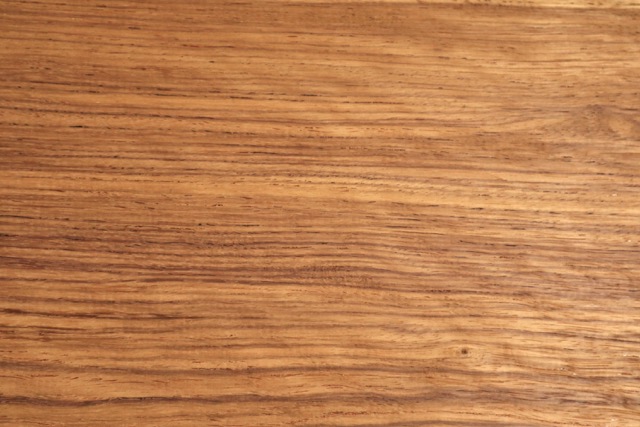
Ababa (Anthonota fragrans) is a lesser-known West African hardwood with warm, earthy tones. It's durable, naturally resistant to decay and insects, and an affordable alternative to more familiar tropical species.The heartwood carries a mix of warm browns, and the grain is interlocked with a medium to coarse texture, which gives finished pieces plenty of character. It's strong without being difficult, machining well and taking a finish beautifully. As with any interlocked wood, a sharp blade and a light final pass help keep tear-out to a minimum.Ababa suits furniture, cabinetry, boxes and interior joinery, and its natural durability makes it worth considering for some outdoor projects too. If you like the striped look of Zebrawood but want something more cost-effective, it's well worth a look.
boxmaking, cabinetry, fine furniture, furniture

Yellow Rosa (Aspidosperma sp.) is a vibrant yellow hardwood and an excellent alternative to Yellowheart. The Aspidosperma genus grows across Central and South America and includes several well-known timbers, such as Peroba Rosa.It's mostly golden, but some boards show soft patches of pink and orange, reminiscent of Peroba Rosa's classic tones. The grain is mostly straight with a fine, even texture, and those occasional color shifts give each board a bit of individuality.It's fine-textured and durable, with a good balance of beauty, strength and workability, and it takes a finish well. A clear finish brings out its warm golden glow, and like most yellow woods it slowly mellows to a deeper gold over time. Sharp tools help where the grain is irregular, and it sands to a smooth, even surface.Yellow Rosa is well suited to fine furniture, flooring, cabinetry, boxes, crafts and other woodworking where you want a splash of color. It pairs especially well with dark woods like Black Walnut or Wenge for contrast.
boxmaking, cabinetry, crafting, fine furniture, flooring, furniture
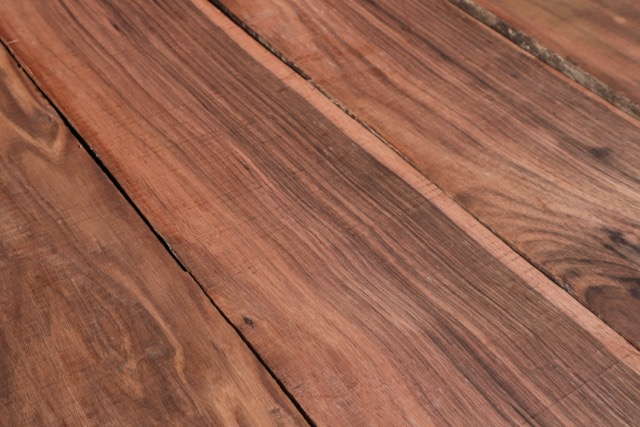
Malaysian Blackwood (Diospyros ebonasea), also called Malaysian Ebony, is a true ebony from Southeast Asia.It's prized for its dense, dark heartwood, which ranges from deep brown to black. Many boards show striking spiderweb-like patterns, so each piece is unique.Like other ebonies it's hard and dense, so use sharp tools and take your time. The reward is a smooth surface that polishes to a fine, lustrous finish and holds crisp detail.Malaysian Blackwood is used for musical instruments, fine furniture, boxes, turnings and other luxury pieces where its color and figure can stand out. If you like its look, take a look at Ziricote and Amara Ebony too.
boxmaking, cabinetry, crafting, fine furniture, lutherie, musical Instruments, specialty items, turnings
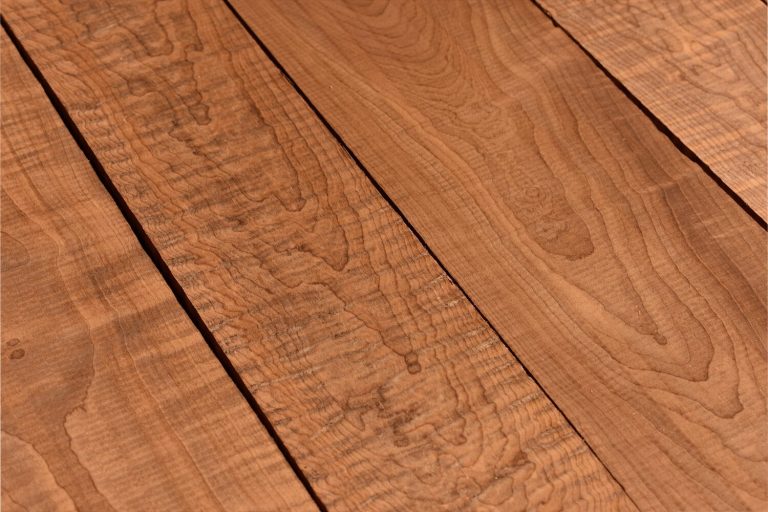
Roasted Curly Soft Maple is Curly Soft Maple that has been thermally modified. The wood is heated gradually to over 160°C in oxygen-free chambers, a natural, chemical-free process that darkens it to a rich caramel or chocolate brown while keeping the curl.The heat changes the wood's cell structure, so it absorbs less moisture. That makes it more dimensionally stable, which guitar makers value for necks. It also becomes a little more brittle, so it chips more easily than unmodified maple, and it's best for tops, panels, flooring and instrument parts rather than intricate joinery. Expect a pleasant, toasty smell when you cut it.The very dry wood soaks up finish, so plan on a generous coat. Our in-house woodworker has had excellent results with Osmo Polyx-Oil, and he suggests a thicker finish works best. Use sharp tools and light passes to avoid chipping in the figure.It's popular with guitar makers for necks and bodies, and for fine furniture, paneling and specialty pieces, where it offers the look of a dark exotic with the reliability of maple. See also Roasted Birdseye Maple.
fine furniture, flooring, interior panelling, lutherie, musical Instruments, specialty items

Roasted Birdseye Maple is Birdseye Maple that has been thermally modified. The wood is heated gradually to over 160°C in oxygen-free chambers, a natural, chemical-free process that darkens it to a rich caramel or chocolate brown while keeping the birdseye figure.The heat changes the wood's cell structure, so it absorbs less moisture. That makes it more dimensionally stable, which guitar makers value for necks and fretboards. It also becomes a little more brittle, so it chips more easily than unmodified maple, and it's best for tops, panels, flooring and instrument parts rather than intricate joinery. It also smells pleasantly toasty when cut.The very dry wood soaks up finish, so plan on a generous coat. Our in-house woodworker has had excellent results with Osmo Polyx-Oil, and he suggests a thicker finish works best. Use sharp tools and light passes to avoid chipping around the eyes.Roasted Birdseye Maple is popular for guitar necks and fretboards, fine furniture, knife handles, bandings and specialty pieces, where it gives the look of a dark exotic with the familiarity of maple.
bandings, crafting, fine furniture, flooring, knife handles, lutherie, musical Instruments, specialty items

Chakte Viga (Caesalpinia platyloba) is a vibrant Central American wood that has been emerging from relative obscurity over the past decade or so. It's thought to be closely related to Pernambuco, the classic violin-bow wood, and shares some of its acoustic properties.The colors range from orange to golden brown, with gold, red and occasionally green accents, set against pale off-white to yellow sapwood. Like many orange woods, it deepens toward a richer reddish-brown over time. The grain is straight, sometimes interlocked, and the texture fine with excellent luster.It's dense and hard, but it works easily with sharp tools and finishes well, and a clear lacquer can bring out a shimmering, three-dimensional chatoyance. It turns beautifully, which makes it a favorite for pens, bowls and small turnings.We think it has real potential as a guitar tonewood and for fine furniture, and it's a great choice for turnings, inlay, boxes and accents. If you like its color, see also African Padauk and Canarywood.
fine furniture, furniture, inlay, turnings
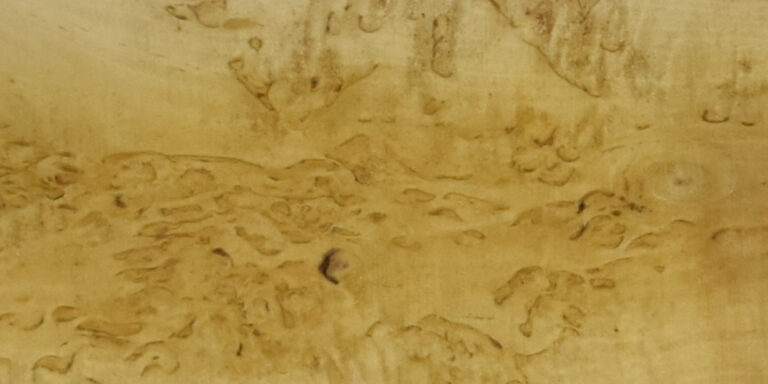
Masur Birch, also called Karelian Birch, isn't a species in its own right. It's a rare figure found in some European birch (Betula pendula) that produces a marbled look somewhere between burl and birdseye.The cause of the figure isn't fully settled. Some point to insect larvae damaging the growing tree, while others believe it's hereditary, and the variety is often named Betula pendula var. carelica. Whatever the cause, the result is striking lumber, and no two pieces are alike.The wood is light brown and works much like other birch, finishing to a smooth surface that shows off the figure.Masur Birch is mostly used for accents, turnings, knife handles and other small specialty pieces. Veneer is rotary-cut, like Birdseye Maple, to show the figure at its best.
fine furniture, knife handles, specialty items, turnings, veneer
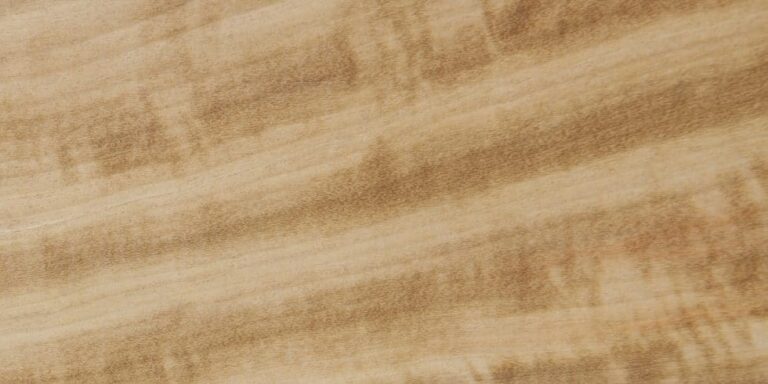
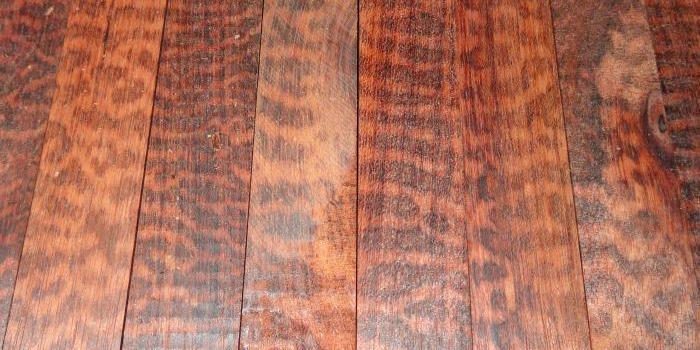
Snakewood (Brosimum guianense) is one of the rarest and most distinctive woods in the world. Its pale yellow, orange-brown or reddish-brown background is covered in dark markings that look remarkably like snakeskin.The grain is usually straight and the texture exceptionally fine, giving finished pieces a remarkable luster. It's a close relative of Bloodwood.It's extremely dense and hard, and it can be brittle, splintering or cracking during machining, so razor-sharp tools and patience are essential. It turns beautifully and polishes to an extraordinary finish.The trees have slender trunks and yield little clear wood, so Snakewood is mostly sold as small billets, turning blanks, scales and pen and bow blanks. It's one of the most expensive woods per board foot, and a favorite for knife and gun handles, inlay, luxury pens, instrument parts and violin bows.
fine furniture, specialty items, turnings


Yellowwood (Podocarpus latifolius) is the national tree of South Africa, and its light, even-grained wood has been used there for hundreds of years, from railway sleepers and building timbers to floors and furniture. The slow-growing trees can reach around 100 feet in moist mountain forests.The heartwood is pale yellowish-brown, sometimes with reddish streaks, and hard to tell apart from the sapwood. The grain is usually straight, occasionally wavy, with a fine, even texture and a nice natural luster.It's tough, stable and easy to work with hand and power tools, and it planes, glues and finishes well. It's fairly light in weight, which makes it pleasant to handle on larger projects, and it takes stains and clear finishes evenly.Old Cape Dutch homes are famous for their yellowwood floors, ceilings and furniture, and antique yellowwood pieces are highly collectible in South Africa. It's still very popular in southern Africa for indoor carpentry and floors. Yellowwood is a lovely choice for boxes, fine furniture and interior work. See also Stinkwood, its traditional partner in Cape furniture.
boxmaking, fine furniture
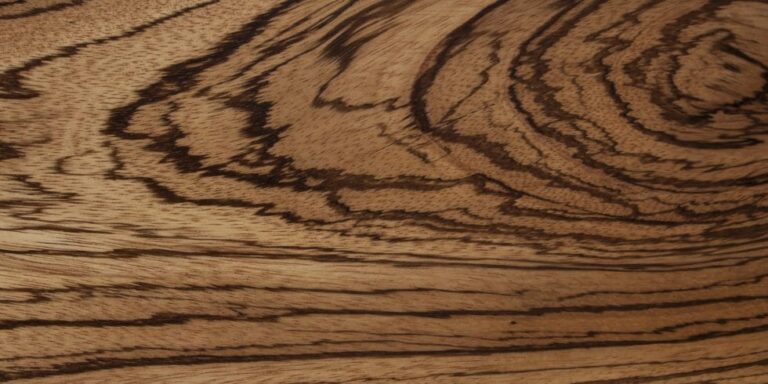
Zebrawood (Microberlinia brazzavillensis), also called Zebrano, is a tough, durable West African wood with bold dark brown to almost black stripes on a pale gold to off-white base. Few woods are as instantly recognizable.Quartersawn boards show long, fairly even stripes, while flat-sawn boards are wavy and wild. The sapwood is pale and unstriped, so it's easy to spot. Once dry, it's a strong, stiff wood, though most people choose it purely for its looks.The texture is coarse with open pores, and the grain is often wavy or interlocked, so planing can be a challenge. Keep blades sharp to minimize tear-out, and fill the pores if you want a glass-smooth finish. It glues well and has a pleasant luster. It can be hard to dry and may warp, so quartersawn stock is the more stable choice, and small voids along the dark stripes aren't unusual.Zebrawood's looks keep it in steady demand with veneer mills around the world, which makes it moderately expensive despite good supply. It's used for veneer, fine furniture, accent panels, handles and turnings. For a lower-priced alternative, see Ababa.
fine furniture, handles, turnings, veneer
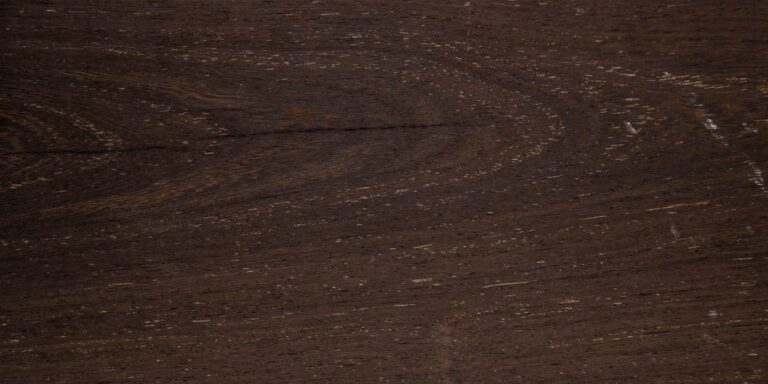
Panga Panga (Millettia stuhlmannii) is an East African hardwood from Mozambique and neighboring countries, and a close cousin of Wenge. The two share a large-pored, coarse texture and some of the same working challenges.It's usually a little lighter than Wenge, with heartwood from medium to dark brown and dark brown to black streaks. Darker boards are easily mistaken for Wenge and can turn almost black with age. Quartersawn boards show a striking, even striped look.It's hard, heavy, durable and stable, and it machines well with sharp tools, though the coarse grain benefits from a filler for a smooth finish. Like Wenge, it splinters easily, and the splinters can become inflamed, so wear gloves and take care when handling it.Panga Panga is better known internationally than in the US, and it's a popular, premium choice for parquet flooring in the UK and Europe. It's also used for fine furniture, paneling, stair treads, trim, turnings and veneer. It offers Wenge's dramatic look with a little more warmth.
fine furniture, flooring, paneling, specialty items, trim, turnings, veneer
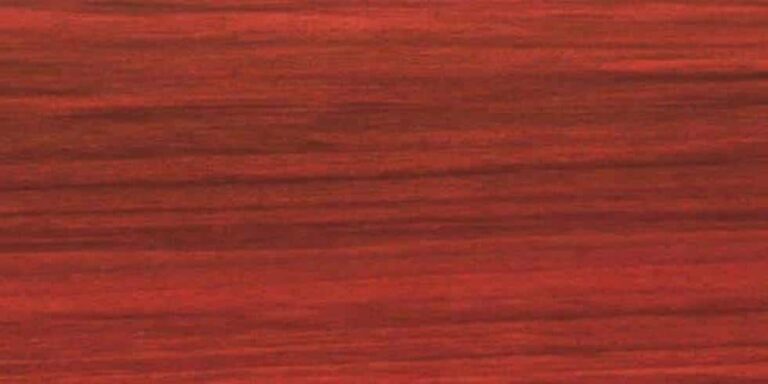
Redheart (Erythroxylum spp.), also called Chakte Kok, is a Central and South American hardwood with a bright pink to red color.The base color ranges from dull to bright pink, pinkish-red or red, with streaks of darker red, yellow, orange and occasionally purple. Like most red woods, it fades toward a brownish tone with light exposure, so a finish with UV protection is a good idea.The grain is often irregular or wild, sometimes straight, and can be wonderfully dramatic. The texture is fine and smooth, though it has little natural luster until finished. It works, turns, glues and finishes well, but dull blades can burn it when resawing, leaving a black resin that takes patient sanding.Redheart is a popular turning wood for pens, bowls and small pieces, and it's increasingly used for custom guitar necks and fretboards, inlay, boxes and accents. Its color makes it a great contrast wood in cutting boards and mixed-wood projects. For another bright red, see Bloodwood.
fine furniture, inlay, specialty items, turnings, veneer

Crotch Mahogany (Swietenia macrophylla) is Genuine Mahogany cut from where the trunk divides into major branches, producing dramatic feather and flame figure that has been prized by furniture makers for centuries.Genuine Mahogany is the world's most sought-after mahogany and the standard others are measured against. Its color ranges from light golden brown to pale pinkish-red, darkening over time to a rich, warm red-brown.Premium pieces have a velvety look, tight, consistent grain and chatoyance from subtle to dramatic. It's very cooperative to work and finish, which also makes it popular with turners and carvers. Crotch grain changes direction a lot, so take light passes and sand carefully to avoid tear-out. Every piece is different, so we recommend choosing by eye.Crotch Mahogany is a showpiece wood for fine furniture, cabinet doors, panels, box lids and veneer, where its figure can be book-matched to dramatic effect. See also Genuine Mahogany lumber.
fine furniture

Curly Hard Maple, or Tiger Maple, is Sugar Maple (Acer saccharum) with bold “tiger stripe” figure, also known as fiddleback when it's tight and even. Curl is more common in soft maples, but it appears in hard maple too, and that's what we stock.As with all maple, the pale sapwood is the most valued part. Dense, pure-sapwood boards with strong figure are the most sought-after and command serious prices with electric guitar makers. The tight curl on quartersawn boards is especially striking, with stripes that seem to move as you tilt the board.It works like any hard maple: take light passes to avoid tear-out in the figure, and go slowly with high-speed tools, as maple can burn. A dye or oil finish makes the curl pop dramatically, which is why it's so popular for guitar tops.Curly Hard Maple is a favorite for fine furniture, Shaker and colonial reproductions, boxes, flooring, cabinetry, gun stocks and veneer, as well as violin backs and guitar necks. See also Curly Soft Maple.
boxmaking, fine furniture, veneer
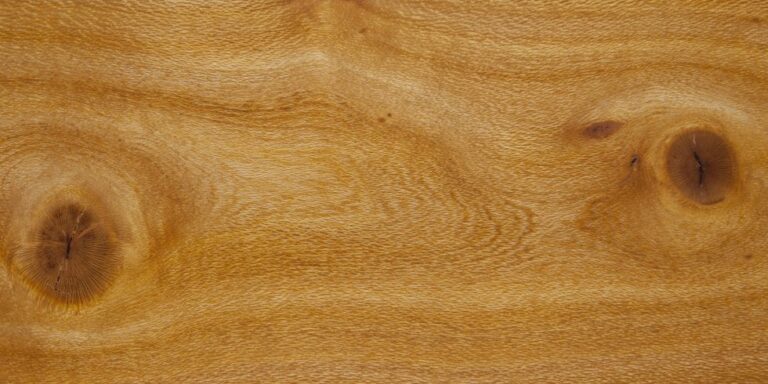
Silky Oak (Cardwellia sublimis) is an Australian hardwood from the rainforests of northern Queensland. It isn't a true oak but a member of the protea family, though it shares the look, with large rays and flecked figure that can be very dramatic on quartersawn faces.It's light to medium reddish-brown, with slightly darker rays ranging from muted brown to grey, and a silky sheen that gives it its name. It's easily mistaken for Lacewood, which looks and weighs much the same.Its coarse texture and flecks can make planing tricky, but otherwise it's easy to work, and it glues and finishes well. It's more durable than American oaks, and a clear finish makes the flecks shimmer.Supply to the US is sporadic, so it isn't widely known here. In Australia it has a long history in fine furniture and cabinetry. It's used for furniture, cabinetry, boxes, turnings, guitar backs and veneer. For a similar flecked look, see Leopardwood.
cabinetry, fine furniture, specialty items, turnings, veneer


Leopardwood (Roupala brasiliensis), also called Brazilian Lacewood, is a South American hardwood named for the tightly grouped flecks that cover its surface.It's almost always quartersawn to show off this leopard-spot figure, which comes from the wood's large rays. It's medium to dark reddish-brown, and before sanding, the raised flecks give the surface a real three-dimensional look. Its color deepens with age, and a clear finish makes the flecks stand out.It's fairly hard to work, and its uneven texture can tear out when planed, so take light passes with sharp blades or use a drum sander for final surfacing. It glues and finishes well once surfaced, and it turns nicely.Leopardwood is often confused with Lacewood, which has a similar pattern but is much lighter and less dense. Its striking figure makes it a favorite for fine furniture, cabinetry, boxes, guitar backs, turnings and veneer, where a little goes a long way as an accent. For a similar flecked look, see Silky Oak.
cabinetry, fine furniture, turnings, veneer

Black Cherry (Prunus serotina) is one of America's most important hardwoods and a long-time favorite for fine furniture. It grows across the eastern United States, with some of the finest timber coming from Pennsylvania and New York.Freshly cut, it's tan to light brown with a pink or red tint, and it ages to the rich reddish-brown (russet) that stains on other woods try to imitate. That color change happens quickly with light exposure. The sapwood is pale yellow, and small dark gum flecks and pith marks are part of its natural character.The grain is straight to irregular, the texture fine and even, and the density moderate. It's one of the most cooperative, user-friendly hardwoods around: easy to work, strong for its weight, stable and durable. It can blotch when stained, but with color like this there's rarely a reason to stain it. Go slowly with high-speed tools, as it can burn.Cherry is used for fine furniture, cabinetry, millwork, flooring, turnings and veneer, and occasionally for guitar necks and bodies. For figured stock, see Curly Cherry.
cabinetry, fine furniture, flooring, millwork, specialty items, turnings, veneer

Curly Black Cherry (Prunus serotina) is the figured version of American Cherry, with bold, shimmering curl running across the grain. The best boards are quite dramatic, with the stripes appearing to move as you tilt the piece in the light.Freshly cut, it's tan to light brown with a pink or red tint, and it ages to a rich reddish-brown that deepens over the years. The grain is straight to irregular, the texture fine, and the density moderate.It's one of the most cooperative hardwoods to work, and it's strong for its weight, stable and durable. Take light passes with a sharp blade to avoid tear-out in the figure, and finish with an oil or clear finish to make the curl glow. It can blotch if stained, but the natural color and figure are the reason to buy it.Curly Cherry is the most sought-after form of this classic American wood, ideal for fine furniture, cabinetry, boxes, drawer fronts and instrument parts where the figure can show. Its stability has also earned it a place in guitar necks and bodies. See also plain Black Cherry.
cabinetry, fine furniture, flooring, millwork, specialty items, turnings, veneer
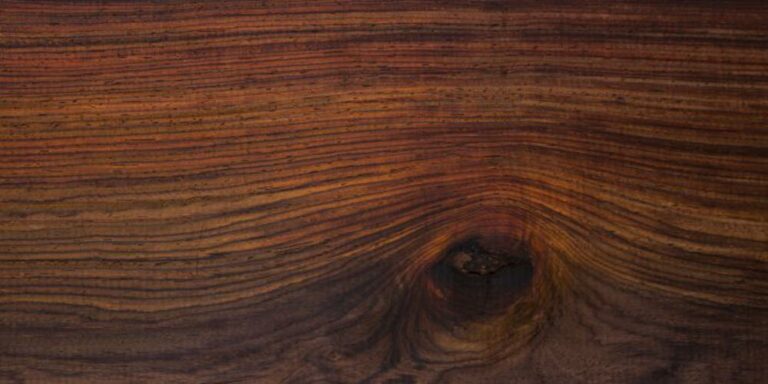

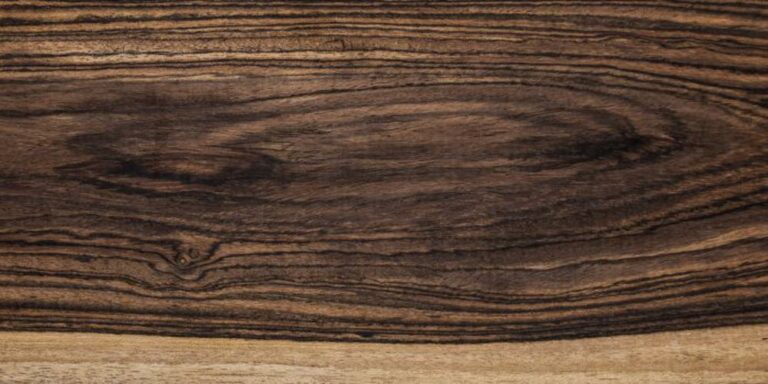
Bocote (Cordia spp.) is a Mexican and Central American hardwood with a golden brown base and dark brown to black stripes.Its best boards are covered in tiny “eyes” in the grain. These aren't knots and cause no trouble when machining. In pieces grown south of Mexico, the base color can be a bright, muted orange.Despite its oily nature, Bocote glues surprisingly well, and it turns and finishes nicely. Some boards contain silica, which can dull blades, so keep a spare sharp edge handy.Its striking looks make it a favorite with furniture and cabinet makers, guitar builders and turners, and it's also used for gun stocks, flooring and veneer. It's related to Ziricote and Louro Preto.
boatbuilding, cabinetry, fine furniture, flooring, gun stocks, specialty items, turnings, veneer