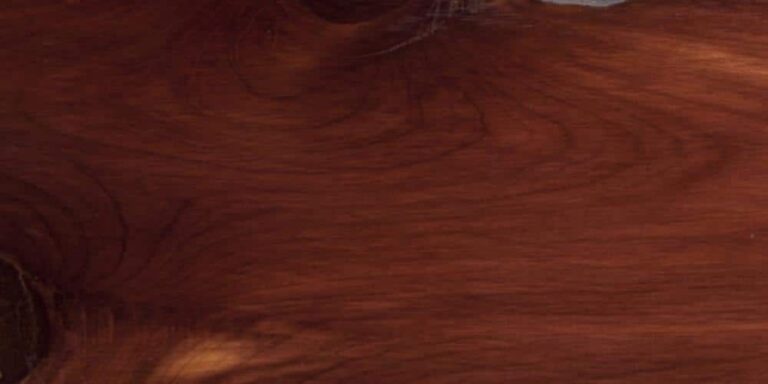


Black Locust (Robinia pseudoacacia) is a hard, strong hardwood native to the central and eastern United States, and one of the most durable woods in North America.The heartwood is greenish-yellow to golden brown when fresh, mellowing to a medium brown with age, and the sapwood is a narrow pale band. The grain is usually fairly straight with a medium texture. It's durable, rot-resistant and fairly stable, which makes it one of the best native woods for outdoor use.Its hardness makes it a little more work to machine, so keep tools sharp and pre-drill for fasteners. It finishes well and weathers to an attractive silver grey if left outdoors.Black Locust fence posts are famous for lasting decades in the ground, and the wood has a long history in shipbuilding, where it was used for wooden pegs called trunnels. It's a great choice for fencing, outdoor furniture, decking, flooring, raised garden beds and handles. We stock it in 4/4 and 8/4, and quality varies, so choose your pieces carefully. For another durable outdoor wood, see Osage Orange.
fencing, flooring, furniture, handles

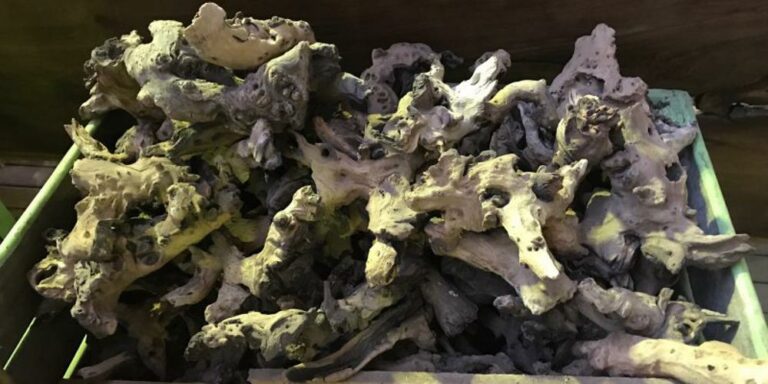
Mopane (Colophospermum mopane) is one of the densest, most stable and durable woods in the world, and still one of southern Africa's best-kept secrets. The tree is known for its butterfly-shaped leaves and is an important food source for the mopane worm, a local delicacy. We stock the roots, and the details here describe the wood.The heartwood is medium to dark brown with a golden to reddish tint, often with black streaks. It's very resistant to insects and has long been used outdoors in its native region. Root pieces offer some of the most interesting figure, with swirling grain and natural shapes.The interlocked grain and great density make it hard to work, but it turns smoothly, polishes to a deep luster and holds fine detail. The trees grow wide and irregular, so large boards are rare.Mopane has been used for centuries for carved woodwind instruments and is valued for its tone, similar to African Blackwood, and it's used today for bagpipe chanters and clarinets. It's a favorite with turners and carvers, and root pieces make striking bowls, bases and natural-edge art.
carving, construction, fencing, flooring, furniture, turnings, utility lumber

Osage Orange (Maclura pomifera), also called Horse Apple or Bodark, is a dense, durable hardwood from the south-central United States, named after the Osage Nation, who prized it for bows. It has striking color.The heartwood starts out bright golden yellow and darkens over time to a deeper golden brown, sometimes with reddish streaks. A finish with UV protection slows the change. The grain is usually straight with a fine to medium texture, and the wood fluoresces under black light.It's hard and dense, which makes it tough to work, but it turns and finishes well. It's one of the most rot-resistant woods in North America, and fence posts made from it are famous for lasting generations. Trees are often short and knotty, so long, clear boards are scarce.It's the classic wood for archery bows, and it's also used for fence posts, tool handles, turnings, pens and specialty pieces. Its South American relative, Argentine Osage Orange, comes in larger sizes with fewer knots.
bows, fencing, specialty items, turnings